The Sponsorship Syllabus: What US Sports and Live-Entertainment Firms Learn Only After the Handshake in Saudi Arabia
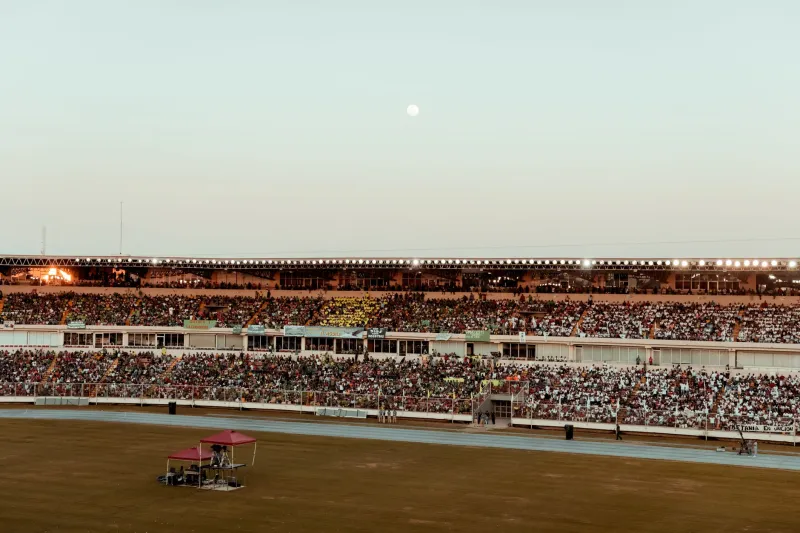
Every quarter, another American agency boards a flight to Riyadh with a deck, a highlight reel, and a conviction that the Kingdom's appetite for sport and spectacle represents the easiest growth market available. Some of those trips produce landmark deals. Others produce a memorandum of understanding, a long silence, and a file that never reopens.
The difference is rarely the quality of the pitch. Saudi Arabia's event economy is now large enough, and sophisticated enough, that enthusiasm is no longer scarce. What remains scarce is patience for entrants who have not mapped how rights, licensing, and local partnership actually work inside the Kingdom.
The Buyer Is Frequently Also the Gatekeeper
The first structural surprise for US firms is that the sponsor, the venue operator, the league, and the licensing authority are often connected — sometimes through the same government body, sometimes through the same sovereign fund portfolio. Entertainment events flow through the General Entertainment Authority. Sporting events touch the Ministry of Sport, the national federations, and the clubs, several of which have moved through a privatization process that has changed ownership structures quickly.
This is not a conflict of interest in the Saudi context; it is the operating model. But it changes your contract architecture. When your counterparty can influence your permit, your recourse in a dispute is not what it would be with a privately held American sponsor. Scope documents need to separate commercial obligations from regulatory approvals explicitly, and both parties should sign up to a clear timetable for permit milestones with defined consequences if they slip.
Rights Are Bundled Differently Here
In the US market, a sponsorship package is legible: rights fee, media inventory, activation budget, hospitality allocation, category exclusivity. In Saudi Arabia, deals are frequently assembled around a broader bundle — naming rights, venue access, government stakeholder alignment, and a local content or community commitment that may not appear in the term sheet but is understood by everyone in the room.
Category exclusivity deserves particular scrutiny. Telecom, banking, aviation, energy, and real estate are dominated by large state-linked players with existing portfolio-wide agreements. An American rights holder who sells "official automotive partner" status without checking what the venue or the broader event portfolio has already promised will discover the conflict at the worst possible moment.
The Categories You Cannot Sell
For US sports media and event businesses, this is the item that most often turns a projected margin into a loss. Alcohol sponsorship and in-venue alcohol sales are restricted. Gambling and sports-betting advertising is prohibited, and this matters enormously for any American property whose domestic revenue model leans on sportsbook partnerships — an increasingly large share of the sector.
Broadcast and promotional content also passes through media regulation, with standards that differ from US practice on language, imagery, and political content. Review your creative approvals process before the first activation, not after.
The Paper Trail Nobody Budgets For
Licensing timelines are the most common cause of blown launch dates. A first-time entrant should plan on roughly three to four months of lead time for a mid-sized event, and longer for anything involving broadcast, large crowds, or international talent. The chain typically runs through an event license, municipal permits, civil defense approval, venue agreements, and broadcast or frequency authorization, with media accreditation layered on top.
Staffing is a second trap. Temporary work permissions for touring crews, riggers, and broadcast technicians take time, and the assumption that a US touring team can be deployed on short notice is frequently wrong. Build a local crewing plan into the budget from day one; it is usually cheaper and always faster.
What Your Local Partner Actually Wants
American firms often arrive expecting a facilitator — a well-connected entity that opens doors for a fee. The more common Saudi expectation is an operating partner with a genuine share of the upside and a defined role in ticketing, venue management, talent booking, or government liaison.
That is a better deal than it sounds, provided it is documented properly. Three clauses decide whether the partnership holds: who owns the intellectual property created for the event, what happens to the relationship if the government's calendar shifts and a headline event is rescheduled, and how the parties exit if year one underperforms. Vague goodwill is not a substitute for any of them.
Fans Do Not Behave Like the Focus Group
Audience assumptions imported from US or European markets tend to fail in specific, predictable ways. Ticketing is overwhelmingly mobile-first and payment behavior differs sharply by city. Riyadh, Jeddah, and the Eastern Province have distinct cultural tones, and a program that lands in one may feel imported in another.
Practical considerations shape attendance more than brand affection. Prayer times and the Ramadan calendar restructure the evening. Summer heat pushes programming indoors or late. Family and mixed-gender attendance has expanded dramatically over the past several years, which means family zones, seating configuration, and F&B design are commercial decisions rather than afterthoughts. And an alcohol-free hospitality product has to be built on access, food quality, and design — it cannot be a stripped-down version of a Western VIP suite.
Arabic-language content is not a translation task. Announcement copy, in-venue graphics, and social creative should be authored in Arabic by people who understand the market's humor and reference points.
Before You Sign
Five checks separate a durable Saudi event business from an expensive education. Confirm category exclusivity against every entity in the event's ownership chain. Obtain a written permit timeline with named responsible parties. Model payment terms of 60 to 120 days and milestone-based releases into your cash flow. Have your tax adviser characterize each payment stream, since withholding treatment differs between royalties and service fees. And verify that your local partner's incentives are aligned for year three, not just launch night.
The Kingdom's calendar is not slowing down. The agencies that will still be standing in 2030 are the ones treating Saudi Arabia as an operating market with its own rulebook rather than a stage for a very large check.