Priced Out by Policy: How US Companies Misread Saudi Market Economics and Destroy Their Own ROI

The Invisible Competitor No American Pitch Deck Accounts For
When US companies conduct market entry analysis for Saudi Arabia, they typically benchmark against visible competitors — local manufacturers, regional distributors, other foreign brands. What rarely appears in those spreadsheets is the single most consequential competitive force in the Kingdom: the Saudi government itself.
Through an extensive and deeply embedded subsidy ecosystem covering energy, water, industrial inputs, and select food commodities, Riyadh has effectively set a price floor — or more accurately, a price ceiling — across multiple sectors that foreign firms cannot match through operational efficiency alone. American companies that enter Saudi Arabia without accounting for this dynamic do not simply underperform. They miscalculate the entire basis of their ROI.
Understanding this ecosystem is not optional intelligence. For any US firm competing in Saudi manufacturing, food production, hospitality, logistics, or consumer goods, it is foundational.
What the Subsidy Architecture Actually Looks Like
Saudi Arabia's subsidy framework is not a patchwork of occasional government support. It is a structural feature of the national economy, engineered over decades to support domestic industry, social stability, and economic diversification objectives.
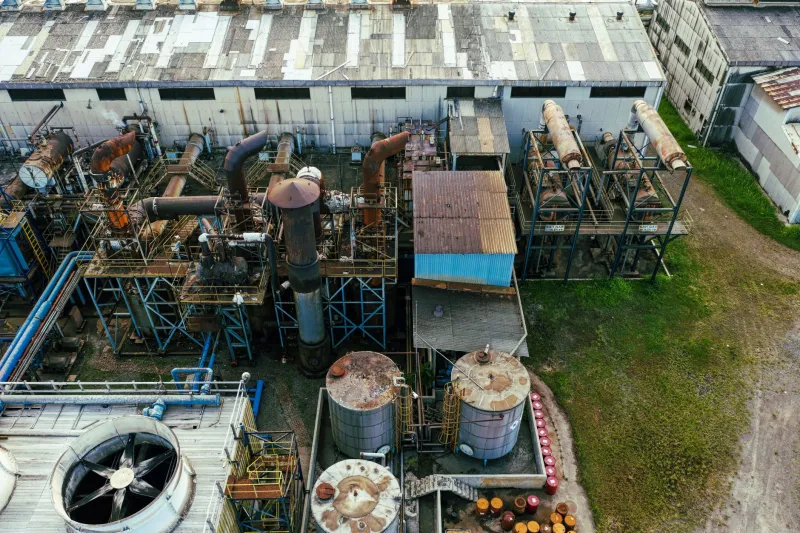
Energy subsidies are the most consequential. Industrial electricity rates in the Kingdom have historically been set well below international market rates, with government pricing mechanisms insulating Saudi manufacturers from the full cost of power consumption. For energy-intensive industries — steel, aluminum, cement, chemicals, plastics — this creates a cost structure that foreign competitors simply cannot replicate through procurement or operational ingenuity.
Water pricing follows a similar pattern. Saudi Arabia, one of the most water-scarce nations on earth, heavily subsidizes desalinated water for agricultural and industrial use. A US food processing company or agricultural operation paying market-rate water costs cannot compete on unit economics with a Saudi counterpart whose water bill reflects government-supported pricing.
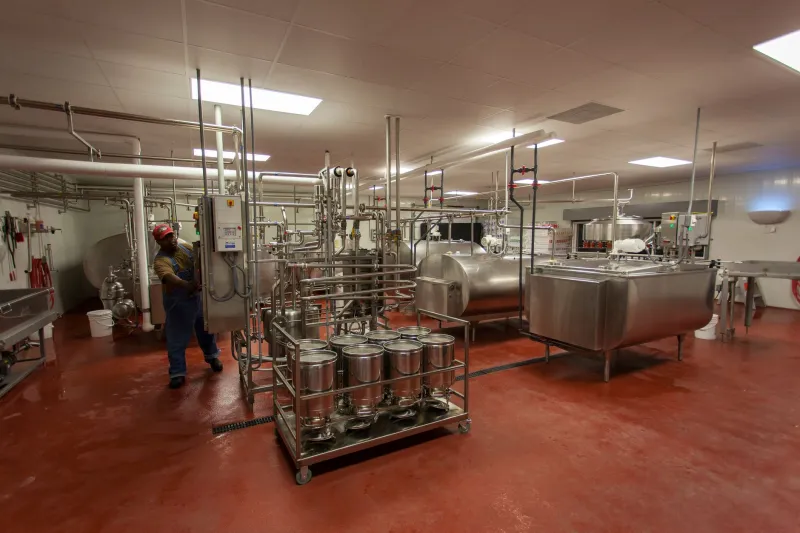
Food commodity subsidies, while somewhat reformed in recent years under Vision 2030's fiscal consolidation agenda, continue to shape downstream pricing in sectors from flour milling to dairy production. Even where direct subsidies have been reduced, the legacy infrastructure — built on decades of subsidized inputs — gives domestic producers embedded cost advantages that take years to erode.
Where the ROI Math Breaks Down for American Firms
The damage to US company financials typically occurs at the projection stage, before a single product ships to Jeddah or a single contract is signed in Riyadh.
Consider a hypothetical American manufacturer of industrial packaging materials entering the Saudi market. The company conducts competitive pricing research, identifies local market prices, and builds a model showing they can compete at a modest premium justified by superior quality and delivery reliability. What the model does not capture is that the local competitor's electricity costs — a significant input for packaging manufacturing — are a fraction of what an equivalent US facility pays. The Saudi producer is not more efficient. They are more subsidized.
The American company's "quality premium" strategy assumes the price gap between their product and the local alternative is modest enough that buyers will pay up for differentiated value. But when the subsidy-driven cost differential is large, the premium required to achieve target margins exceeds what the market will bear. The business case evaporates.
This pattern repeats across sectors. US hospitality operators underestimate the cost of utilities relative to local competitors. American food brands miscalculate the shelf price gap between their imported product and a domestically produced equivalent benefiting from subsidized inputs. Industrial equipment suppliers fail to anticipate that Saudi fabricators, working with cheap energy and water, can produce locally at a landed cost below the American export price.
Identifying Where You Actually Compete Fairly
The subsidy trap is not universal. It is sector-specific and input-specific. The strategic discipline for US companies is to map exactly which cost lines in their product or service are affected by Saudi subsidy structures — and which are not.
Technology and software are largely subsidy-neutral. A US enterprise software platform, a cybersecurity solution, or a cloud-based logistics management system does not compete against subsidized inputs. The competitive landscape in these categories is shaped by capability, integration quality, and support infrastructure — areas where American firms frequently hold genuine advantages.
Premium consumer goods occupy a similar position. Imported American food brands, lifestyle products, and luxury goods are not trying to match the unit economics of subsidized domestic production. They are selling differentiation — provenance, quality signals, brand identity. Saudi consumers purchasing a premium American product are not comparing it to a subsidized local equivalent. They are paying for something the subsidy ecosystem does not produce.
Specialized industrial services — engineering consulting, advanced manufacturing process design, precision quality control systems — also sit largely outside the subsidy distortion zone. Saudi industrial subsidies lower input costs; they do not manufacture expertise. US firms with genuine technical specialization can compete on capability rather than price in these categories.
Healthcare technology, education services, and financial advisory represent additional sectors where American competitive advantages are not neutralized by government pricing support.
Repositioning Tactics for Subsidy-Affected Markets
For US companies that identify subsidy-driven price gaps in their target sector, the options are not limited to retreat. Several positioning strategies can restore competitive viability.
Pursue the premium segment explicitly. Rather than competing across the full market, concentrate on buyer segments — often larger enterprises, government entities with international procurement standards, or high-income consumers — where quality and reliability carry sufficient weight to justify a meaningful price premium. Attempting to win on price in a subsidy-distorted market is a losing strategy. Winning on demonstrable value in a defined segment is not.
Establish local production or assembly partnerships. If the subsidy advantage accrues to Saudi-based production, a US company with a local manufacturing or assembly partner may be able to access some of those structural cost benefits while retaining brand and quality control. This requires careful partner vetting and a clear legal framework, but it fundamentally changes the competitive equation.
Anchor proposals to total cost of ownership, not unit price. Many Saudi procurement decisions — particularly in industrial and infrastructure sectors — are made by sophisticated buyers who understand lifecycle costs. A US product that carries a higher purchase price but delivers lower maintenance costs, longer service intervals, or superior energy efficiency can win on total economic value even when it cannot win on sticker price.
Engage Vision 2030 alignment as a commercial argument. Saudi Arabia's economic transformation agenda is explicitly oriented toward reducing subsidy dependence and building internationally competitive domestic industries. US companies offering technologies, processes, or partnerships that accelerate that transition have a strategic argument that resonates at the decision-making level — one that transcends the immediate price comparison.
Reading the Market Honestly Before You Model the Returns
Saudi Arabia remains one of the most significant commercial opportunities available to American businesses in the current global environment. The Kingdom's scale, its investment trajectory, and its genuine appetite for international partnerships create real pathways to durable, profitable market positions.
But the path requires intellectual honesty at the analysis stage. ROI projections built on surface-level price benchmarking, without accounting for the subsidy architecture that shapes those prices, will consistently mislead US leadership teams into overestimating competitive viability in certain sectors and underinvesting in the sectors where American firms genuinely hold the advantage.
The companies that succeed in Saudi Arabia long-term are the ones that enter with a clear-eyed understanding of where the playing field is level — and build their strategy from that honest foundation.