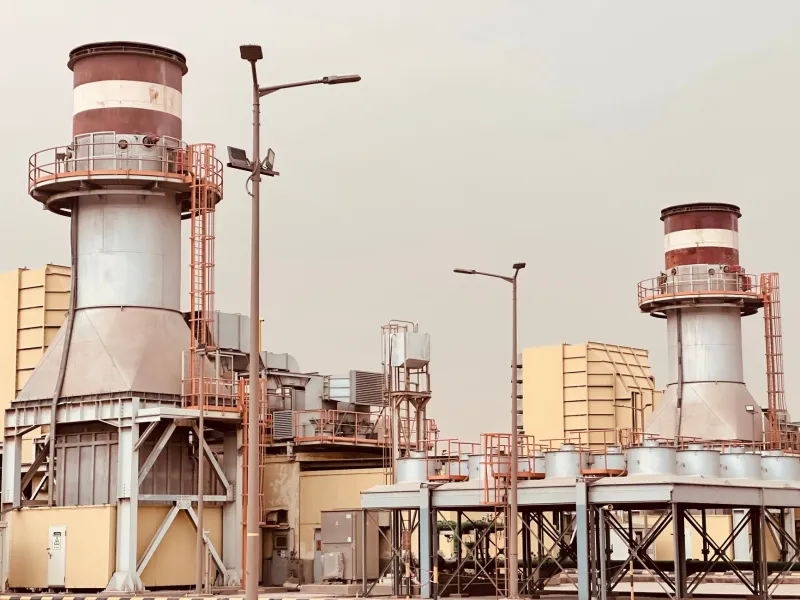
Inside Aramco's Supply Chain Overhaul: What US Industrial Companies Need to Know to Get a Seat at the Table

The Scale of What Aramco Is Actually Building
Most American executives who follow global energy markets know Saudi Aramco as the world's largest oil producer. Far fewer understand that Aramco has evolved into something considerably more complex: a domestically focused industrial ecosystem builder, actively restructuring its supply chain from the ground up.
Through its In-Kingdom Total Value Add (IKTVA) program, Aramco has committed to sourcing 70 percent of its goods and services from within Saudi Arabia by 2025. That target is not aspirational language—it is a contractual framework that governs how vendors are evaluated, how contracts are scored, and how long-term supplier relationships are structured. For American manufacturers, engineering firms, and industrial service providers, this single policy shift has created a procurement environment unlike anything available in other Gulf markets.
The numbers are worth pausing on. Aramco spends in excess of $40 billion annually on goods and services. Even a fractional share of that figure represents transformative revenue for mid-market US industrial companies. Yet the pipeline of American firms successfully navigating the process remains surprisingly thin.
Understanding why requires looking past the headline opportunity and into the mechanics of how Aramco actually awards contracts.
What IKTVA Means in Practice for American Vendors
The IKTVA framework does not simply reward the lowest bidder or the most technically capable supplier. It rewards suppliers who contribute measurably to Saudi Arabia's domestic industrial development. That means American companies entering the supply chain conversation need to arrive with more than a product catalog—they need a localization strategy.
In practical terms, this means demonstrating one or more of the following: a commitment to establishing manufacturing or service operations inside Saudi Arabia, a plan to train and employ Saudi nationals, a technology transfer arrangement with a local partner, or a joint venture structure with a Saudi entity that creates genuine domestic value.
Companies that approach Aramco procurement as a pure export play—ship the product, invoice the client, repeat—consistently find themselves outscored by competitors who have made even modest investments in local infrastructure. A US valve manufacturer that opens a small assembly and maintenance facility in Jubail, for instance, will almost always outperform a technically superior competitor that insists on shipping finished goods from Houston.
The lesson is not that American quality or capability is insufficient. It is that the procurement evaluation criteria extend well beyond product specifications.
The Subsidiary Expansion Creating New Entry Points
Aramco's corporate structure has expanded significantly through subsidiaries and affiliates operating across petrochemicals, logistics, engineering, and digital infrastructure. Companies such as Aramco Trading, SABIC (now majority-owned by Aramco), and Aramco's digital ventures arm each operate distinct procurement functions with their own vendor qualification processes.
This subsidiary architecture is critically important for American companies because it creates multiple entry points into the broader Aramco ecosystem. A US software company that cannot immediately qualify as a core oilfield services vendor may find a far more accessible pathway through Aramco's digital transformation initiatives. A specialty chemicals manufacturer that lacks the scale for a primary SABIC contract may qualify as a technical services provider to one of SABIC's joint ventures.
Mapping the full subsidiary landscape before initiating outreach is not optional—it is foundational. American companies that direct all their attention toward Aramco's central procurement office frequently miss the more accessible affiliate opportunities that could establish their credibility and track record within the ecosystem.
Vendor Qualification: The Timeline Reality
Perhaps the most consistent frustration reported by American industrial companies attempting to enter Aramco's supply chain is the qualification timeline. The formal vendor registration and qualification process typically spans twelve to eighteen months before a company becomes eligible to bid on contracts. Pre-qualification audits, technical assessments, financial reviews, and site inspections all occur in sequence, not simultaneously.
For US companies accustomed to rapid procurement cycles, this timeline can feel prohibitive. The correct response is not to attempt to accelerate the process through pressure or intermediaries—that approach tends to backfire. The correct response is to begin the qualification process significantly earlier than feels necessary, treating it as a parallel workstream rather than a precondition to market entry.
Companies that initiate qualification procedures twelve to eighteen months before they intend to begin generating revenue in Saudi Arabia consistently report smoother outcomes than those who treat qualification as a checkbox to complete once a commercial opportunity has materialized.
Strategic Positioning That Separates Winners From Applicants
American companies that have successfully embedded themselves in Aramco's supply chain share several observable characteristics beyond technical capability and price competitiveness.
First, they invest in direct relationships with Aramco's supplier development team rather than relying exclusively on procurement contacts. The supplier development function exists specifically to help vendors understand qualification requirements and improve their IKTVA scores—engaging this team proactively signals seriousness and generates guidance that is genuinely difficult to obtain through other channels.
Second, successful US vendors almost always arrive with a named Saudi partner already identified. This does not necessarily mean a formal joint venture from day one, but it does mean having a credible local entity that can support IKTVA compliance, facilitate site visits, and provide the cultural and logistical continuity that Aramco's procurement teams expect.
Third, they specialize. Aramco's procurement organization receives significant volumes of general capability statements from international vendors. Companies that position themselves as the definitive solution for a narrow, specific technical problem—rather than a broad industrial services provider—consistently report higher engagement rates from procurement contacts.
The supply chain renaissance underway inside Aramco is not a temporary procurement cycle. It reflects a structural shift in how Saudi Arabia intends to build and sustain its industrial base over the next two decades. American companies that position themselves now, with appropriate patience and genuine localization commitment, are not chasing a contract—they are building a market position that compounds in value over time.