Sacred Ground, Serious Business: The Pilgrimage Economy Opening Doors for American Companies in Saudi Arabia
When Faith Meets Commerce at Scale
Every year, Saudi Arabia orchestrates what may be the single most complex logistical event on the planet. The Hajj pilgrimage — obligatory once in a lifetime for every able-bodied Muslim — draws upward of two million international visitors to Mecca and the surrounding holy sites over the course of just five days. Expand that window to include Umrah, the non-mandatory pilgrimage that runs year-round, and Saudi Arabia is managing a visitor flow that rivals the busiest international airports and convention centers in the United States, sustained across twelve months.
For American companies scanning the Saudi market for opportunity, this is not background context. It is the opportunity itself.
Saudi Arabia's Vision 2030 framework has set an ambitious target of accommodating 30 million Hajj and Umrah visitors annually by the end of this decade — nearly triple pre-pandemic figures. Achieving that goal requires the kind of infrastructure investment, technology deployment, and operational expertise that no single domestic supplier can provide alone. The Kingdom is actively looking outward, and American firms with relevant capabilities are well-positioned to respond.
The Infrastructure Buildout Is Already Underway
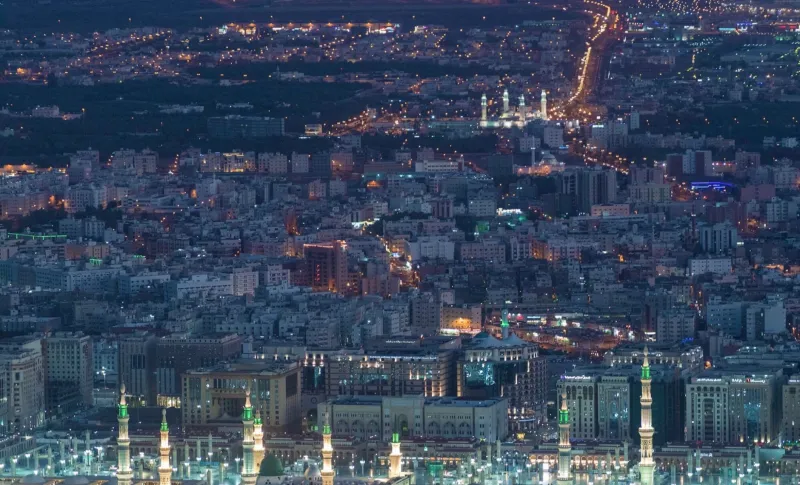
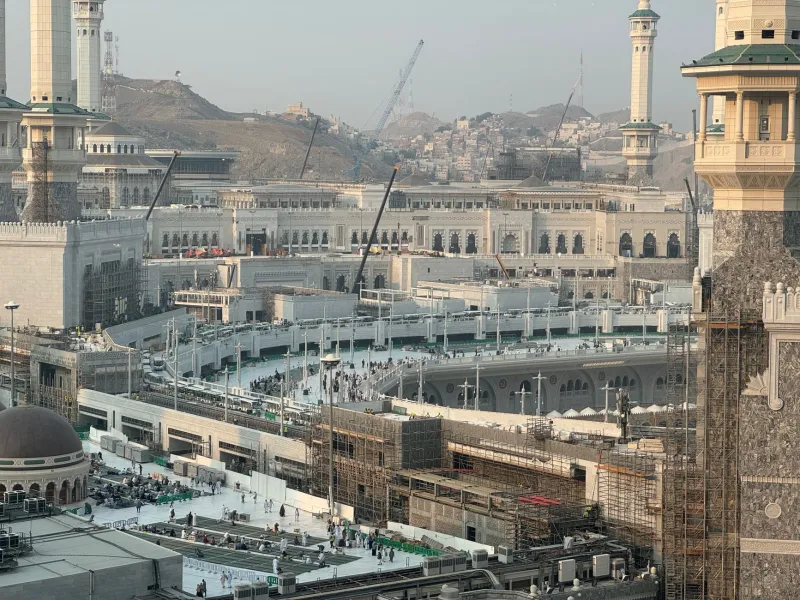
The physical transformation of Mecca and Medina is staggering in scale. Saudi Arabia has committed hundreds of billions of riyals toward expanding the Grand Mosque, redesigning pedestrian corridors, constructing new hotel and hospitality zones, and modernizing transportation networks connecting the two holy cities. The Haramain High-Speed Railway — already operational — connects Mecca, Medina, Jeddah, and King Abdullah Economic City in a corridor that moves pilgrims with the efficiency of a commercial airline hub.
American construction technology firms, engineering consultancies, and smart building solution providers have a direct line into this buildout. Crowd management technology, in particular, represents a field where US companies carry genuine competitive advantage. The challenge of safely routing millions of pedestrians through confined sacred spaces — while monitoring health conditions, responding to emergencies, and maintaining crowd density thresholds — is a problem that intersects public safety engineering, real-time data analytics, and AI-assisted monitoring. Several US-based firms already operating in stadium management, mass transit, and emergency response technology have found their existing portfolios directly applicable to this environment.
Hospitality Logistics: A Market Few Americans Have Mapped
The hospitality dimension of the pilgrimage economy is frequently underestimated by outside observers. Pilgrims require accommodation, food service, ground transportation, medical support, and retail access — all compressed into an extraordinarily short window and spread across a geographically constrained area. The Saudi government manages much of this through licensed tour operators and hospitality conglomerates, but the supply chains feeding these operators are vast and largely open to international participation.
Food and beverage supply chains serving Hajj-adjacent hospitality operations represent a particularly underexplored category for American exporters. US-produced packaged foods certified to meet halal standards, commercial kitchen equipment, cold chain logistics systems, and food safety monitoring technology are all categories where American manufacturers can find willing buyers. The Saudi hospitality sector has demonstrated a preference for internationally recognized quality standards, and American brands carry significant credibility in this regard.
Beyond food, American medical supply companies have found consistent demand in the pilgrimage corridor. The concentration of elderly pilgrims, the physical demands of the Hajj rituals, and the risk of communicable disease transmission in dense crowds create a sustained market for portable medical equipment, respiratory products, and field hospital infrastructure. Saudi health authorities have invested heavily in pilgrimage medical infrastructure, and American suppliers who have engaged through proper procurement channels report reliable, repeat business.
Technology Services and the Digital Pilgrim
Saudi Arabia's Ministry of Hajj and Umrah has made digital transformation a central pillar of its expansion strategy. The Nusuk platform — the Kingdom's official digital ecosystem for pilgrimage management — handles pilgrim registration, permit issuance, itinerary coordination, and service booking. This infrastructure requires ongoing development, integration with third-party service providers, and cybersecurity oversight at a level that mirrors enterprise-grade commercial platforms.
American technology companies, particularly those with experience in large-scale identity verification, payment processing, multilingual UX design, and cloud infrastructure management, are finding the Ministry's digital ambitions align closely with their existing capabilities. The pilgrimage economy is also accelerating demand for translation and localization technology, given that pilgrims arrive speaking dozens of languages. US firms specializing in real-time translation services, AI-powered customer service tools, and multilingual content management have an opening that extends well beyond the Hajj season itself.
Year-round Umrah operations are pushing demand for digital concierge services, accommodation booking platforms, and integrated travel management systems. American travel technology companies that have not yet considered Saudi Arabia as a market should note that the pilgrimage tourism vertical is now one of the Kingdom's fastest-growing digital investment categories.
Navigating the Procurement Landscape
American companies approaching this market should understand that the pilgrimage economy operates through a layered procurement structure. The Saudi government sets policy and manages macro-level contracts, but execution flows through licensed hospitality operators, regional contractors, and increasingly, private sector conglomerates with Vision 2030 mandates. Identifying the right intermediary tier — and establishing relationships before the annual procurement cycle opens — is essential.
Saudi Arabia's General Authority for Statistics publishes pilgrimage data that can help American firms calibrate market sizing. The Ministry of Hajj and Umrah maintains a supplier engagement framework that, while not always straightforward for foreign companies to navigate independently, becomes significantly more accessible when approached through established local partners or commercial attachés at the US Embassy in Riyadh.
Timing matters considerably in this market. The pilgrimage economy does not operate on a standard fiscal calendar — it follows the Islamic lunar calendar, which means Hajj shifts approximately eleven days earlier each Gregorian year. American companies accustomed to annual planning cycles need to build flexibility into their engagement timelines and ensure their Saudi counterparts are consulted on scheduling well in advance.
The Year-Round Dimension That Most Companies Miss
Perhaps the most significant misconception American firms carry into this market is the assumption that pilgrimage-related business is seasonal. In reality, the infrastructure, staffing, technology systems, and supply chains supporting Hajj require year-round maintenance, testing, and procurement. Vendors who demonstrate commitment to the full operational calendar — rather than appearing only in the months preceding Hajj — build the kind of sustained credibility that Saudi procurement officers value.
Umrah, which operates across all twelve months, now generates more cumulative visitor volume than Hajj in any given year. The Saudi government's goal of 30 million annual pilgrims is predicated heavily on Umrah growth, and the hospitality, logistics, and technology infrastructure serving that visitor flow represents a consistent, recurring commercial opportunity rather than a seasonal spike.
For American companies that have focused their Saudi market analysis on petrochemicals, defense, or consumer goods, the pilgrimage economy represents a largely unmapped territory with genuine structural demand and government-backed investment momentum. The entry barriers are real — cultural fluency, local partnerships, and patient relationship-building remain prerequisites — but the commercial logic is compelling. Saudi Arabia is building the infrastructure to host tens of millions of faith-driven visitors annually, and it needs partners with the expertise to make that vision operational.