Port to Doorstep: Navigating the Hidden Obstacles in Saudi Arabia's Freight and Delivery Chain
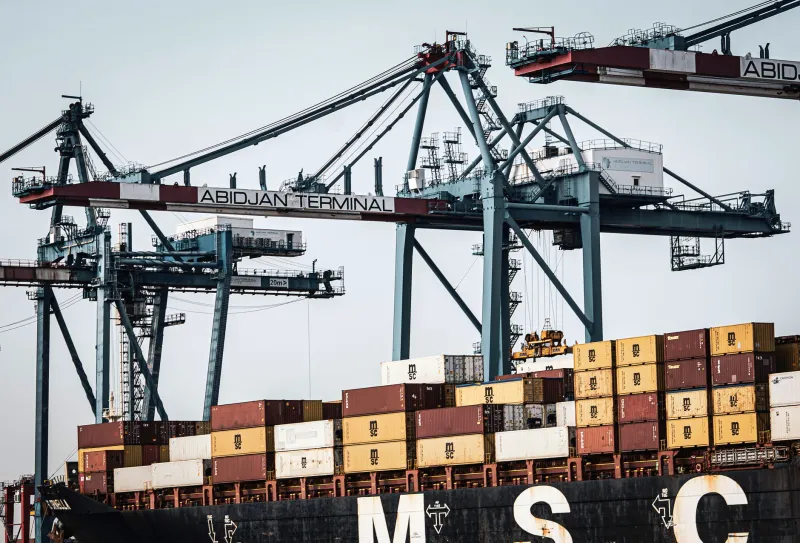
For American companies shipping goods to Saudi Arabia, the excitement of a new market opportunity can quickly give way to frustration when a container sits idle at Jeddah Islamic Port for three weeks without explanation. This is not an unusual scenario. It is, in fact, one of the most commonly reported experiences among US exporters making their first serious attempt to establish a supply chain foothold in the Kingdom. The logistical infrastructure of Saudi Arabia has expanded considerably under Vision 2030, but the operational realities on the ground remain layered with procedural demands, documentation sensitivities, and last-mile complexities that catch even experienced international shippers off guard.
Understanding precisely where shipments stall—and why—is the first step toward building a freight strategy that actually holds up under real-world conditions.
The Port Bottleneck: More Than a Capacity Problem
Saudi Arabia's primary import gateways—Jeddah Islamic Port on the Red Sea and King Abdulaziz Port in Dammam on the Arabian Gulf—handle enormous cargo volumes. Jeddah alone processes millions of TEUs annually, making it one of the busiest container terminals in the Middle East. The sheer scale of activity creates predictable congestion windows, particularly in the weeks surrounding Ramadan, Eid Al-Fitr, and Eid Al-Adha. American exporters who have not mapped their shipping calendars against the Islamic lunar calendar frequently find their cargo arriving during periods of reduced port staffing and extended inspection queues.
Beyond seasonal surges, the port environment itself introduces structural delays. Terminal handling procedures at Jeddah can involve multiple handoffs between port authority personnel, customs inspectors, and third-party logistics agents. Each transition point represents an opportunity for documentation discrepancies to surface. A misclassified Harmonized System code, an Arabic translation that does not precisely match the English commercial invoice, or a certificate of origin that omits a required notarization can halt a shipment entirely until the matter is resolved—often through a process that requires physical presence or a licensed customs broker acting on the exporter's behalf.
Experienced freight forwarders operating in the Saudi market recommend building a minimum of 15 to 21 additional business days into any delivery timeline projection during peak periods, and 7 to 10 days during standard shipping windows. This is not pessimism. It is the operational baseline that separates companies that absorb delays without financial consequence from those that scramble to explain missed delivery commitments to Saudi clients.
Documentation Redundancy: The Discipline That Protects Your Shipment
The Saudi Zakat, Tax and Customs Authority (ZATCA) maintains rigorous documentation standards that differ meaningfully from what US exporters are accustomed to presenting for shipments to European or Latin American markets. A complete Saudi import documentation package typically includes a commercial invoice, a packing list, a bill of lading or airway bill, a certificate of origin authenticated by a US Chamber of Commerce and legalized by the Saudi Embassy or consulate, and—depending on the product category—a certificate of conformity issued by an approved Saudi Standards, Metrology and Quality Organization (SASO) body.
The strategic response to this complexity is documentation redundancy. Logistics professionals who regularly move goods through Saudi ports advise maintaining digital and physical copies of every document in at least three locations: with the freight forwarder, with the Saudi importer of record, and in a secure cloud archive accessible to the exporter's operations team. When customs agents request a secondary copy of a certificate that was presumed to be on file, the ability to produce it within hours rather than days can prevent a shipment from being moved to a secondary inspection area—a designation that almost always compounds the delay.
US exporters should also invest time in confirming that their Saudi counterpart or licensed customs broker has reviewed all documentation before the cargo departs American shores. Corrections made in Los Angeles are infinitely less costly than corrections attempted at Jeddah.
Customs Clearance: Where Time and Money Converge
Customs clearance in Saudi Arabia is not a single event. It is a sequential process that can involve physical cargo inspection, laboratory testing for food and consumer goods, halal certification verification for applicable product categories, and import duty assessment. The duration of this process varies considerably based on product type, the quality of submitted documentation, and the relationship between the licensed customs broker and the relevant port authority personnel.
For American companies unfamiliar with this environment, the single most consequential decision is the selection of a Saudi-licensed customs broker. Not all brokers carry equal weight within port authority systems. A broker with an established track record at Jeddah Islamic Port, a network of contacts within ZATCA, and demonstrated experience handling US-origin goods will navigate the clearance process with a speed and precision that a generalist broker simply cannot match. When negotiating with freight forwarders, US exporters should explicitly ask which customs brokers the forwarder partners with at each Saudi port of entry, and request references from other American clients who have shipped comparable product categories.
Demurrage charges—fees assessed when containers remain at the port terminal beyond their free storage period—are a significant and often underestimated cost exposure. These charges accumulate daily and can represent thousands of dollars in unexpected expense if clearance is delayed. Securing an extended free-time arrangement with the shipping line before cargo departs the United States is a negotiating lever that many first-time Saudi exporters fail to exercise.
Last-Mile Delivery: The Final Friction Point
Once goods clear customs and enter the Saudi domestic logistics network, a distinct set of challenges emerges. Saudi Arabia's geography—vast distances, dispersed urban centers, and significant variation in address standardization—creates last-mile delivery conditions that differ substantially from the US domestic environment. While major cities such as Riyadh, Jeddah, and Dammam have mature courier infrastructure, deliveries to secondary cities and industrial zones may involve multiple carrier handoffs and extended transit times.
Saudi Post and a growing ecosystem of regional logistics providers, including Aramex and Naqel Express, have expanded their networks considerably in recent years. However, American exporters shipping time-sensitive or high-value goods should consider negotiating dedicated delivery arrangements with their Saudi distribution partner rather than relying on standard commercial courier services. For B2B shipments destined for commercial facilities, coordinating delivery windows directly with the receiving party's warehouse or operations team reduces the risk of missed deliveries and the costly redelivery cycles that follow.
Building a Freight Strategy That Holds
The exporters who move goods through Saudi Arabia most efficiently share a common discipline: they treat logistics as a strategic function rather than an operational afterthought. They engage freight forwarders with genuine Saudi market expertise early in the market entry planning process, not after a purchase order has already been confirmed. They build documentation review checkpoints into their pre-shipment procedures. They pad their delivery timelines generously and communicate those timelines honestly to their Saudi partners.
The Saudi logistics landscape is evolving rapidly, with significant government investment in port modernization, customs digitization, and last-mile infrastructure. But evolution does not eliminate complexity. For American companies prepared to engage with that complexity systematically, the path from US warehouse to Saudi doorstep is navigable—and increasingly competitive.