Zone Arithmetic: A US Manufacturer's Field Guide to Saudi Arabia's Special Economic Zones
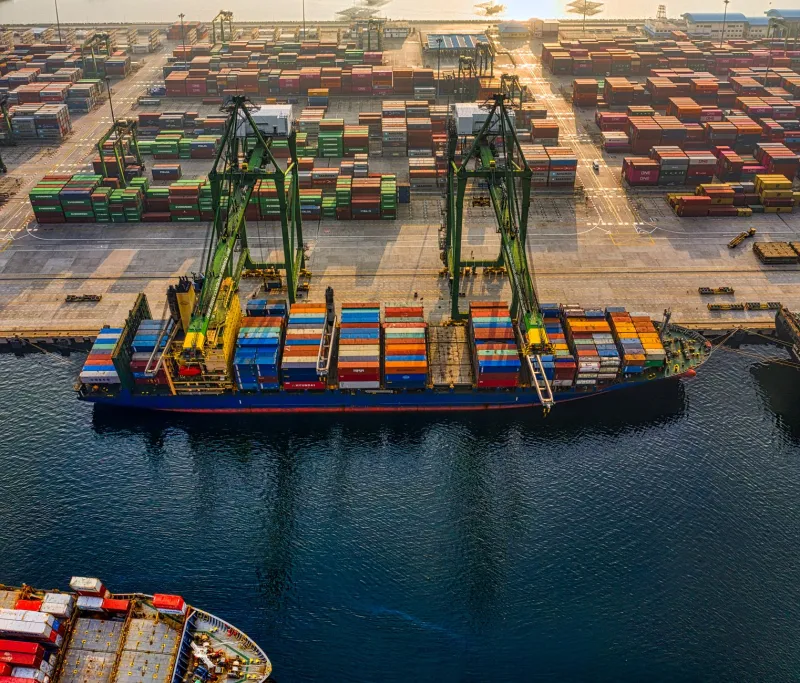
For a US manufacturer building the case for a Saudi footprint, the slide that usually closes the argument is a map: a cluster of zones near a port, a rail link, a promise of duty-free movement. The numbers on that slide are real. The work sits in the annexes — in the licensing pathway, in the customs treatment on the day goods cross the fence, and in the labor rules that determine who can actually run the line.
Saudi Arabia's special economic zones were announced in 2023 and have since become one of the most over-simplified topics in the Kingdom's investment conversation. They are neither a generic tax shelter nor a bureaucratic dead end. They are four purpose-built jurisdictions, each tied to a different value chain, sitting alongside a much larger network of industrial cities. Deciding which one fits your production model — or whether a mainland site fits better — is the entire exercise.
Four Zones, Four Different Businesses
The zone map is not interchangeable. King Abdullah Economic City, north of Jeddah, is oriented toward logistics, light manufacturing, and consumer-goods assembly, with strong Red Sea access. Ras Al Khair, on the Gulf coast, is built around minerals and downstream metals, adjacent to the Kingdom's mining and refining complex. Jazan, in the southwest, targets food processing and agricultural value chains. The fourth, a cloud computing zone in Riyadh, is a services play rather than an industrial one.
Alongside these sit the industrial cities managed under the MODON umbrella, which house thousands of operating factories and offer their own land, utility, and financing packages. Many US manufacturers compare a special economic zone against a mainland site when the more realistic benchmark is a MODON industrial city — cheaper land, less bespoke service, fewer tax advantages.
The first question is therefore not "which zone gives the best deal" but "which of these was designed for my product." A company making packaging film for Saudi consumers and a company processing Saudi ore for export are answering two entirely different questions.
The Incentive Stack, Line by Line
Zone incentives are frequently presented as a single headline number. They are better read as a stack, because each layer carries conditions.
- Corporate income tax. Zone-registered entities are currently offered a reduced rate of 5 percent for up to twenty years, against a standard 20 percent on the mainland. Note that zakat applies to Saudi and GCC-owned shares, so the effective position depends on your ownership structure.
- Customs. Goods moving into the zone are generally relieved of duty; goods moving from the zone into the Saudi mainland are treated as imports and attract the applicable tariff. This single rule determines most of the economics.
- Ownership. Full foreign ownership is available, and the zone licensing stream may be administratively faster than the standard route — though full foreign ownership has also been broadly available on the mainland since the 2020 investment law changes, so this is a convenience, not a unique concession.
- Labor. Zones offer relaxed Saudization ratios and more flexible access to expatriate labor, coordinated with the Ministry of Human Resources. Read the fine print on skilled versus unskilled categories.
- Utilities. Industrial tariffs and capacity allocation are negotiated through the zone authority. The timeline to energize a facility is often the critical path, not the price.
A separate program — the regional headquarters framework — offers its own long-duration tax relief, but an RHQ license is not an operating license and should not be conflated with a zone position.
The Customs Math Nobody Runs
The decisive test is simple: where does your product finally get consumed?
If you are assembling or processing inside the zone and re-exporting — to GCC markets, East Africa, or the Red Sea corridor — the duty relief compounds with logistics savings and the model can be genuinely compelling. If you are manufacturing for the Saudi domestic market, every unit you ship out of the zone picks up the tariff you thought you had avoided, and the zone's advantage narrows considerably against a mainland plant that imports components under its own duty regime.
Two further details deserve a customs broker's attention early. First, origin rules: qualifying for preferential treatment under GCC or Saudi-origin frameworks depends on value-add thresholds that your bill of materials may or may not clear. Second, bonded and temporary-admission arrangements exist outside the zones and can, in specific cases, deliver similar cash-flow benefits without relocating your plant.
Where a Zone Adds Friction, Not Savings
The counter-case is rarely presented, so here it is.
A zone adds a regulator to your reporting chain. You are now answering to the zone authority in addition to the investment ministry, the tax authority, and customs. For a lean US mid-market company with a single regional controller, that is real overhead.
Zone geography is often peripheral. King Abdullah Economic City sits roughly an hour and a half north of Jeddah. That is a housing, schooling, and spouse-employment question for your expatriate managers, and a trucking-cost question for your supply chain.
Financing can be harder. Saudi lenders price against mainland assets and cash flows; a zone entity with a segregated balance sheet may need a parent guarantee or a different structure. And exiting — selling or restructuring a zone entity — carries its own approval sequence that should be documented before you sign the lease, not after.
A Framework for the Decision
Three questions, answered in order, will resolve most of the ambiguity.
One: what share of your landed cost is duty-exposed? If it is small, the tax and customs advantages shrink to background noise and you should optimize for labor and logistics instead.
Two: how long is your ramp? A twenty-year tax window is worth little if your facility takes four years to reach steady state and your board is evaluating on a five-year horizon.
Three: does the zone's target industry match yours? Zone authorities are staffed and incentivized around specific value chains. A manufacturer outside the cluster will find the service level drops and the discretionary support thins.
The Bottom Line
Model the zone as a standalone profit-and-loss, not as a discount on the mainland case. Run the customs treatment past a broker who has actually cleared goods out of a Saudi zone. And speak with two or three existing tenants before you accept the incentives deck at face value. The zone advantage is real — but it is arithmetic, not magic, and it only works when the production model matches the jurisdiction.