From San Francisco to Riyadh: How American Tech Companies Are Capitalizing on Saudi Arabia's Digital Transformation

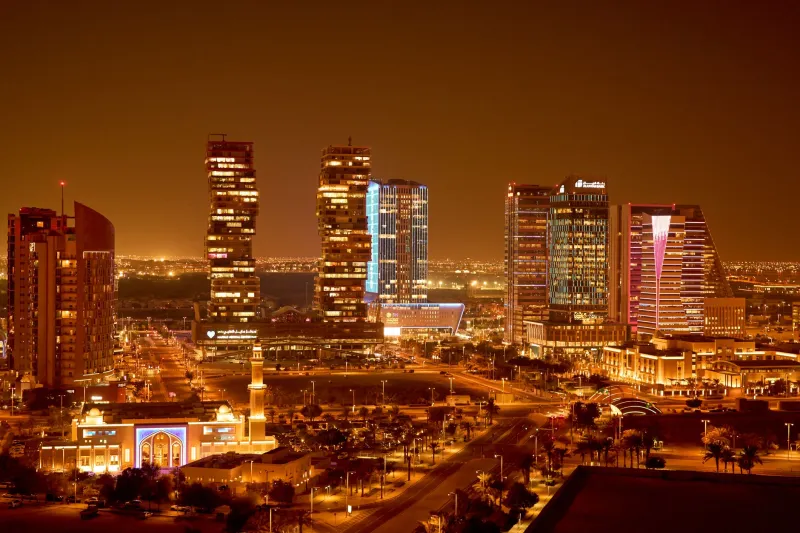
Photo by Photo by سيف الظاهر on Unsplash on Unsplash
A Transformation Too Large to Ignore
When Saudi Arabia announced Vision 2030 in 2016, international observers noted the ambition of the plan while quietly reserving judgment on its feasibility. Nearly a decade later, the results are difficult to dispute. The Kingdom has invested hundreds of billions of dollars in economic diversification, and the technology sector sits at the center of that effort. For American tech companies — from early-stage startups to publicly traded platforms — the question is no longer whether Saudi Arabia represents a serious opportunity. The question is how quickly they can position themselves to capture it.
The digital economy Saudi Arabia is building is not a replication of existing models. It is an attempt to construct 21st-century infrastructure at scale, in a compressed timeframe, with sovereign capital backing the effort. That combination creates conditions that are genuinely rare in global markets: a buyer with deep pockets, a clear mandate, and an urgent timeline.
The Sectors Driving Technology Demand
Several verticals within Saudi Arabia's transformation agenda are generating particularly strong demand for American technology expertise.
Fintech and Digital Financial Services
Saudi Arabia's financial sector is undergoing a structural shift. The Saudi Central Bank (SAMA) has actively encouraged the development of a fintech ecosystem, issuing regulatory sandbox licenses to dozens of companies and publishing a fintech strategy that targets the creation of hundreds of licensed fintech entities by the end of the decade. Payment infrastructure, digital lending platforms, open banking solutions, and Islamic finance technology are all areas where American companies with relevant IP and operational experience have found receptive counterparts.
US fintech firms that have navigated domestic regulatory complexity — particularly those that have worked within the frameworks of the Consumer Financial Protection Bureau or state-level money transmission licensing — often find that their compliance experience translates well to Saudi Arabia's evolving regulatory environment, where SAMA has shown a preference for partnering with established, credentialed operators.
Logistics Automation and Supply Chain Technology
The Kingdom's geographic position as a transit hub between Asia, Europe, and Africa makes logistics modernization a strategic national priority. NEOM, the giga-city project under construction in northwestern Saudi Arabia, has explicitly embedded autonomous logistics and smart supply chain systems into its foundational design. Beyond NEOM, Saudi Arabia's broader logistics sector — anchored by the Saudi Ports Authority and the national rail network — is actively seeking automation, predictive analytics, and last-mile delivery technology.
American companies specializing in warehouse robotics, route optimization software, and freight visibility platforms have a meaningful window of opportunity. Saudi logistics operators are not looking for proof-of-concept pilots. They are looking for deployable solutions with demonstrated track records.
Renewable Energy Technology
Vision 2030 includes an ambitious target of generating 50% of Saudi Arabia's electricity from renewable sources by 2030. The scale of solar and wind projects currently underway or in development is staggering, and the technology requirements span hardware, software, grid management systems, and energy storage solutions. American cleantech companies — particularly those with experience in utility-scale solar deployment or grid-edge technology — are finding that Saudi Arabia's Public Investment Fund (PIF) and its subsidiary entities are sophisticated, engaged buyers.
The NEOM Green Hydrogen project alone represents a multi-billion-dollar technology procurement exercise that has drawn international partners from multiple continents. US companies with proprietary electrolysis technology, hydrogen storage expertise, or green energy project management capabilities are well-positioned to compete for roles in projects of this nature.
The Capital Landscape: Government Incentives and Venture Backing
One of the most significant structural advantages of the Saudi market for incoming American tech companies is the availability of non-dilutive and co-investment capital from government-aligned sources.
The Saudi Venture Capital Company (SVC), established by the Small and Medium Enterprises General Authority, has committed billions of riyals to building the Kingdom's startup ecosystem. Foreign technology companies that establish a legal presence in Saudi Arabia — particularly those that incorporate in the Special Integrated Logistics Zone or register with the Ministry of Investment under an eligible activity category — can access co-investment structures, grant programs, and preferred procurement status.
The MISA (Ministry of Investment of Saudi Arabia) has streamlined the foreign company registration process considerably over the past several years. Wholly foreign-owned entities are now permitted across a wider range of sectors than was historically the case, removing a structural barrier that previously forced American companies into joint venture arrangements they did not always want.
For startups specifically, the Riyadh-based venture ecosystem has matured rapidly. Firms such as STV (Saudi Technology Ventures) have deployed hundreds of millions of dollars into regional technology companies and have expressed explicit interest in co-investing alongside US venture firms in companies that serve the Saudi market.
What Successful US Tech Entries Have in Common
American technology companies that have established productive footholds in Saudi Arabia tend to share several strategic characteristics.
First, they committed to a physical presence. Remote-first strategies that work in other international markets carry significantly more friction in Saudi Arabia, where relationship-building is a foundational element of commercial trust. Companies that placed experienced personnel on the ground — not just for a launch trip, but on a sustained basis — built credibility that remote competitors could not replicate.
Second, they engaged with government stakeholders early. Saudi Arabia's largest technology procurement decisions frequently involve government ministries, sovereign wealth fund subsidiaries, or state-owned enterprises. American companies that mapped the decision-making landscape before pursuing commercial relationships were able to align their offerings with stated national priorities, which accelerated procurement timelines.
Third, they localized thoughtfully. This did not require abandoning their core product or technology stack. It meant ensuring Arabic-language interfaces where relevant, understanding the cultural dimensions of business communication, and demonstrating genuine long-term commitment to the market rather than a transactional interest in a single contract.
Positioning for the Decade Ahead
The arc of Saudi Arabia's digital transformation extends well beyond 2030. The infrastructure being built today — smart cities, digital financial rails, renewable energy grids, automated logistics networks — will require sustained technology partnership for decades. American companies that establish credibility and operational presence in the Kingdom during this foundational period are not just securing near-term revenue. They are positioning themselves as essential partners in the architecture of a digitally transformed nation.
For US tech firms evaluating international expansion, few markets combine the scale of opportunity, the depth of available capital, and the clarity of national intent that Saudi Arabia currently offers. The window for first-mover positioning remains open, but it will not remain open indefinitely. The companies writing the next chapter of US-Saudi commerce are already on the ground in Riyadh.